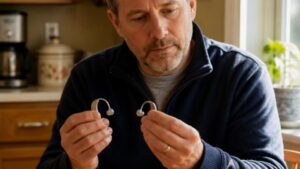
How to Clean Hearing Aids at Home
Wipe your hearing aids with a soft, dry cloth every day, and brush the microphone openings and sound outlet clear of wax and debris. Keep water and household cleaners off the aid.

Wipe your hearing aids with a soft, dry cloth every day, and brush the microphone openings and sound outlet clear of wax and debris. Keep water and household cleaners off the aid.

Musical ear syndrome describes hearing melodies, singing, or instrumental music when no external music is playing. A hearing evaluation can identify hearing loss that may contribute to the experience and help guide

Headphones and earbuds are not automatically bad for your ears, but loud volume and long listening sessions can increase the risk of noise-related hearing damage. Safer listening usually means lowering the volume,

Ear picks, ear spoons, and curettes are small tools marketed for removing earwax from the ear canal. These tools can scratch the canal, push wax deeper, or injure the eardrum when used

Hearing aid whistling is usually feedback, which happens when amplified sound leaks out of the ear and gets picked up again by the hearing aid microphone. A whistling hearing aid may need

Earwax is a natural and important part of ear health, but too much buildup can cause discomfort, hearing trouble, or earaches if it is not managed properly. This article explains how earwax removal

Hyperacusis is a hearing disorder that causes everyday sounds to feel painfully loud or overwhelming. Symptoms can affect comfort, emotions, and daily life, but professional help can make a real difference. With

In this guide, we will explore what causes swimmer’s ear, what symptoms to look out for, how it is diagnosed, treatment options, prevention strategies, and when to see a doctor or audiologist

Tinnitus affects millions of people worldwide, causing a persistent ringing or buzzing sound that isn’t coming from the outside world. While there is no cure, hearing aids for tinnitus can make a